SOIL IMPROVEMENT

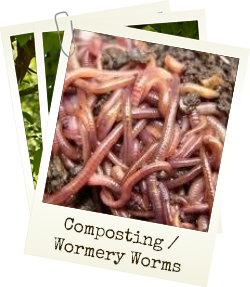
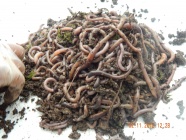
Earthworms have worked tirelessly for millennia aerating, tilling and fertilizing the soil. Unfortunately the profligate use of chemical fertilizers and pesticides over the last 50 years has reduced eartworm populations and has taken its toll on the fertility of the soil.
Gilbert White, an English Naturalist beautifully described the value of earthworms in1777:
“The earth without worms would soon become cold, hardbound and void of fermentation, and consequently sterile…Earthworms, though in appearance a small and despicable link in the Chain of Nature, yet, if lost, would make a lamentable chasm”
 

Earthworms improve the soil in a number of different ways:
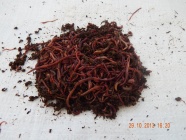
 Anecic worms ( worms that form permanent burrows ) like Lumbricus terrestris improve the aeration and water holding capacity of the soil by forming deep burrows, they come up to the surface to retrieve decaying organic matter and pull it down deep into the soil. They ingest large quantities of soil and organic matter, grind it up and excrete it as worm castings on the surface of the soil. They are the best worms to use if you have very heavy clay soil and need to improve its structure.
In the 1920s a New Zealand hill farmer realised that the earth worm population of his soil was very low. He began transplanting worms into his isolated hillsides. 20 years later soil researchers visited his farm. They found that the areas that were thoroughly populated with Lumbricus terrestris grew 20 times more ryegrass and produced more grass for livestock to graze than those that had been left untouched. Thanks to the worms his flock of ewes doubled and the amount of wool he clipped quadrupled. The worms fed the grass, the grass fed the ewes and the ewes fed the farmer.
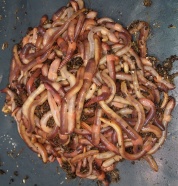
Epigeic worms are surface dwellers, they live in the top few inches of soil, they are prolific breeders and eaters, they double their population every 4 to 6 months and they eat half their body weight in food a day. and need a constant supply of decaying organic matter to thrive. They produce larger quantities of worm casts than anecic worms but they do need feeding once or twice a year by top dressing the soil with an organic mulch such as manure or mushroom compost.
You can use either but a combination is often best.
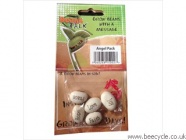
Lumbricus are much more expensive because they are much harder to breed, they cost about 10 times as much as epigeic worms. Combination worm inoculation packs supply approx.10 lumbricus plus 50 epigeic worms per 2 square metres.

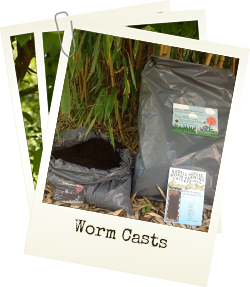
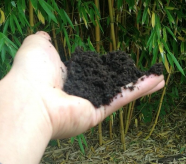
Worm casts are a cost effective way of improving soil fertility and should be spread at a rate of 1 to 2 tonnes per acre. Most research into the benefits of worm casts has been done by Dr Edwards and his team at Ohio University. They have found that not only do worm casts improve productivity they also confer resistance to pests and diseases.


EM for soil improvement
EM liquid and EM Bokashi have numerous applications for soil improvement.
EM IN THE GARDEN
EM is fantastic in helping you minimise the use of artificial fertilisers and pesticides.
In brief it confers the following benefits:

·                   Promotes germination, growth, flowering and fruiting
·                   Stimulates the microbial activity in manure and soil
·                   Enhances the photosynthetic capacity of plants
·                   Increases the efficacy of organic matter as fertiliser
·                   Develops resistance of plants to pests and diseases
EM is supplied as a dormant liquid culture. Certain strains of bacteria in the culture only activate and multiply in the presence of a food source such as sugars, for this reason activated EM is more beneficial than the ‘neat’ culture for most applications.
Activation only requires warm water and A+ (molasses) to be mixed with the EM culture and then to be left somewhere warm, like an airing cupboard for a few days. For those of you who like gadgets there is a kit available that makes it very easy (the EM Activator)
EM-A can be sprayed on soil as a pre-planting treatment, used to inoculate seeds or transplants, and be applied to growing crops as a spray. It can be applied to cover crops and green manures during growth and after incorporation into the soil.
Standard dilution
For most applications in the garden EM-A is diluted 1:100 with water, preferably rain water, if tap water is used let it stand for 24 hours for chlorine to evaporate.
Planting and maintenance of lawns and borders
You will need to use 1-2 litres of EM-A per 100m2 of lawn or border. The EM-A should be weather. You should avoid spraying in hot sun (this summer, 07, would have been ideal!) The recommended amount can be divided up and used more than once.
Pre planting
Two to three weeks before planting apply a 1:100 dilution of EM-A to the soil as a spray. Use 1 litre EM-A per 100m2.
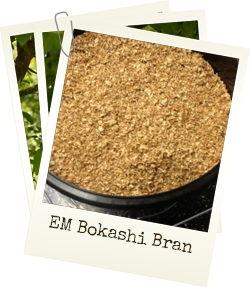
An alternative is to use 0.5kg bokashi compost per metre square (instructions on making it follow). Dig it into the soil 14 days before planting or sowing
Vegetable and fruit growing
During the growing season spray the plants with a 1:100 dilution of EM-A, again it is preferable to do this during wet weather, apply it at 3 to 4 week intervals
If adding bokashi compost, rake it into the soil between rows.
Seed treatment
Soak seeds in a solution of EM-A which has been diluted 1:1000 with water. Soak them for 5-10 minutes and then leave them out to dry before planting as usual.
Cuttings and grafts
Before taking cuttings and grafts, drench the material briefly in a solution of water with EM concentrate. 0.1 litres EM in 10 litres of water.
Once the new plants have established themselves further growth can be promoted by adding EM-A to the watering can. 0.1 litres of EM-A to 50 litres water.
Making a Bokashi Compost Heap from scratch
As with any compost heap a mixture of organic materials is needed, combining materials with high and low carbon: nitrogen ratios, grass, weeds, shredded cuttings etc.
Activated EM should be diluted 1: 5 to 1:10 with water and sprayed or sprinkled over the organic material. The amount of water you use to dilute the EM-Active depends on the moistness of the material you are composting. You want it to be damp but not soggy.
If you have food waste that you have fermented with bokashi this can be added to the compost but make sure you put other compostable waste on top.
The material should be heaped up in layers and then compressed to expel as much air as possible.
Cover the heap with a plastic cover or piece of carpet.
You can leave it for 6 weeks after which time it will have fermented but not composted so it will not look like conventional compost. This fermented material can be used as a plant fertiliser. Add it to the soil 14 days before planting or sowing. Use about 0.5kg per metre square.
Alternatively you can allow the material to carry on composting and manage it as you normally would. You will find that the EM will speed up the composting process by about 25% and the resulting compost will be stuffed full of nutrients and beneficial micro-organisms.
Using Activated EM on an established compost heap
If your compost heap is already a work in progress then spaying or sprinkling Activated EM in a diluted solution of 1:10 on top of the compost heap will suppress odour and speed up the process.
Use 1 to 2 litres of Activated EM per cubic metre (1000 litres) of compost
 
Back
Our Vision

Our aim is to encourage and inspire people to harness the might of the worm to recycle their organic waste and produce vermicompost. If worms aren’t your thing we provide advice on other forms of environmentally friendly food waste solutions. read more...